
Behavioural Governance: How Singapore Eliminated Littering
How certainty, visibility, and enforcement reshaped public space

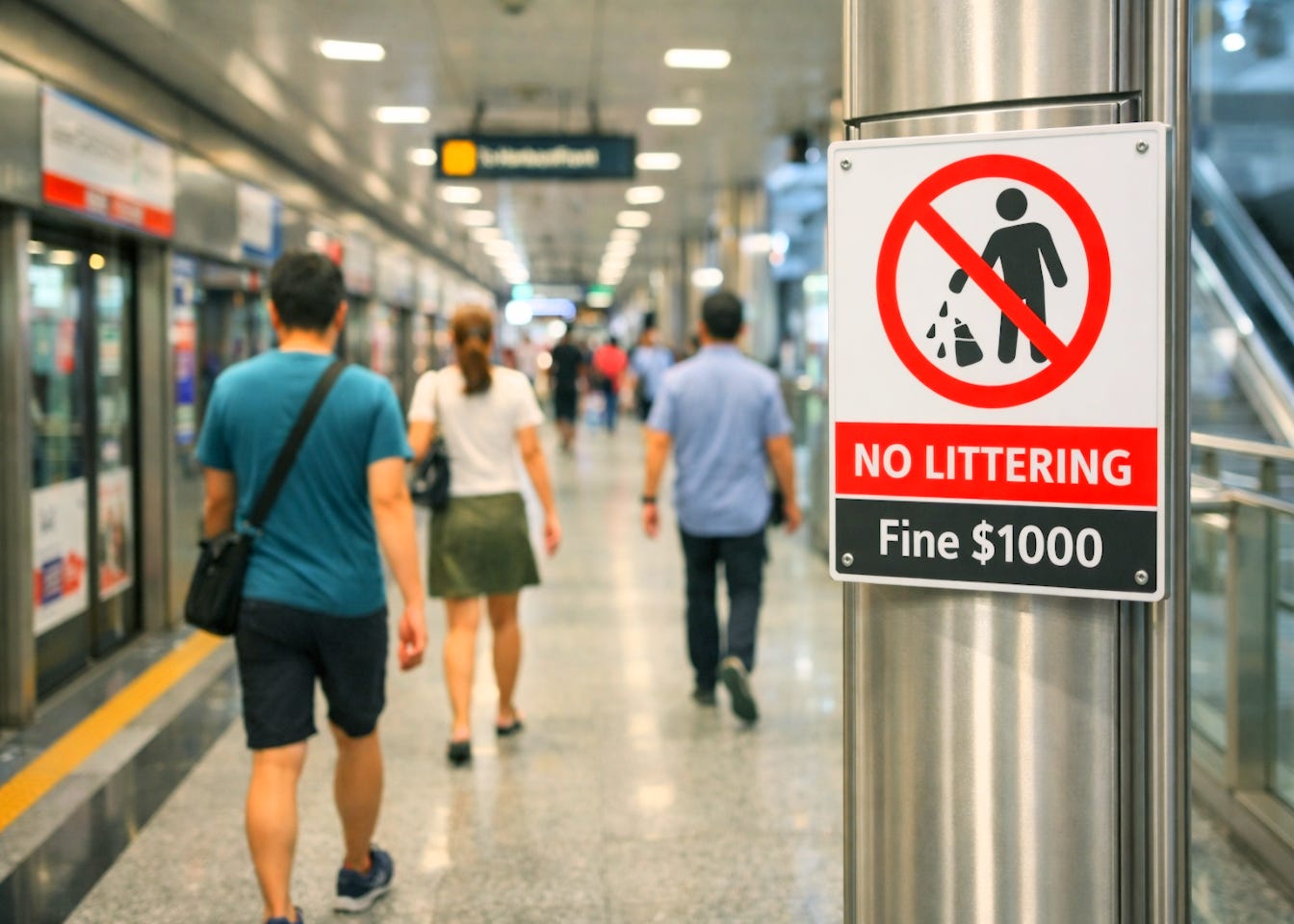
Few places provoke as immediate a reaction from visitors as Singapore. The streets feel unusually clean. Public spaces look maintained rather than merely serviced. Litter is not just uncommon, it feels socially out of place.
This is often attributed to culture. Singaporeans are said to be naturally disciplined, civic-minded, or unusually respectful of public space.
That explanation is convenient, and wrong.
Singapore’s cleanliness is not the product of inherited values.
It is the result of deliberate behavioural governance.
When littering was ordinary
In the decades following independence, Singapore was not pristine. Rapid urbanisation, overcrowding, informal settlements, and limited municipal capacity produced familiar problems. Rubbish accumulated. Public spaces degraded. Appeals to civic pride achieved little.
The conditions that produced littering were entirely normal.
What changed was not the people, but the rules applied to them.
This matters because it dispels the myth that cleanliness emerged organically.
Reframing litter as a public harm
The state’s first move was conceptual. Littering was not framed as bad manners or individual irresponsibility. It was framed as a collective cost.
Dirty streets undermined public health, tourism, and social order. They imposed burdens on everyone else.
Behaviour that is merely “rude” invites debate.
Behaviour that imposes shared costs invites enforcement.
Once littering was defined this way, it became governable.
Fines that people actually expect
Singapore introduced fines for littering early and kept them simple. The critical factor was not severity, but certainty.
People understood three things clearly: littering was illegal, fines were real, and enforcement was routine.
Expected consequence mattered more than punishment size.
Behaviour adjusted because outcomes became predictable.
Rules were reinforced through signage, public campaigns, and visible penalties. There were no ambiguous zones where enforcement might or might not apply.
Visibility as a behavioural tool
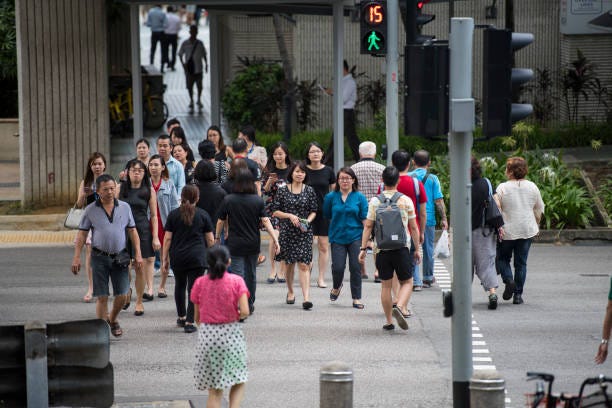
Enforcement is designed to be seen.
Uniformed officers, CCTV coverage, and routine patrols created an environment where observation felt ordinary rather than exceptional. You did not need to be watched constantly. You only needed to know that you could be.
Public cleaning orders were not about humiliation.
They were about signalling that the rule was real.
Behaviour changed because expectations changed.
Embedding norms early
Singapore did not rely on correcting adult behaviour alone. Cleanliness norms were embedded early through schools, public messaging, and daily routines.
Children grew up seeing clean public space as the baseline, littering as abnormal, and enforcement as ordinary.
What is enforced during formative years becomes what feels natural later.
This is how norms persist.
Why enforcement now feels minimal
One of the most revealing features of Singapore’s public cleanliness today is how little active enforcement appears to be required.
Most people comply automatically. Littering feels socially awkward before it feels legally risky.
This is the endpoint of behavioural governance.
Enforcement sets expectations. Expectations shape habits. Habits become norms.
Once norms are established, enforcement can recede into the background.
What this example actually demonstrates
Singapore’s success was not about cultural exceptionalism. It was about design.
Behaviour responds to certainty, not lectures.
Visibility matters more than punishment severity.
Norms follow enforcement, not the other way around.
Cleanliness was treated as infrastructure, something maintained through systems, incentives, and feedback rather than hope.
Law, enforcement, and the production of culture
Littering is a trivial behaviour. That is precisely why it is such a revealing case study.
If a state can reliably change a small, everyday habit, it demonstrates real capacity. If it cannot, larger ambitions are usually rhetorical.
What this case ultimately shows is a simple sequence that is often inverted in public debate:
Law shapes behaviour by altering incentives.
Repeated behaviour forms habit.
Habits harden into social norms.
At that point, culture appears to have changed. In reality, it has been produced.
Singapore did not wait for a culture of cleanliness to emerge.
It enforced rules, changed behaviour, and allowed norms to follow.
That is not an authoritarian anomaly. It is how behavioural change works at scale.
This article is part of the Behavioural Governance series, examining how states shape everyday behaviour through law, enforcement, and norm formation, rather than treating culture as something that emerges on its own.