
What is Pragmatic Statism?
The case for strategic state power

Political language is crowded with labels that obscure more than they clarify. “Capitalist.” “Socialist.” “Authoritarian.” “Neoliberal.” These terms often describe ideological commitments rather than governing behaviour.
Pragmatic statism describes something different. It is not a doctrine about markets or morality. It is a governing posture.
At its core, pragmatic statism is the belief that the state must retain strategic supremacy over national development, while remaining flexible about the tools it uses to achieve it.
It is not anti-market.
It is not anti-private sector.
It is not inherently democratic or anti-democratic.
It is outcome driven. It sees reality for what it is, not how it ought to be.
A pragmatic state asks one central question: does this increase stability and long term national strength?
If the answer is yes, it stays. If the answer is no, it goes.
Below is a structured definition.
1. The State as Strategic Coordinator
In a pragmatic statist system, the state defines long term priorities. Infrastructure, housing, finance, industrial direction, education and national security are not left to spontaneous market drift.
Private actors operate within frameworks shaped by state objectives.
This does not mean total planning. It means strategic coordination.
Markets allocate within boundaries. The state sets those boundaries.
2. Markets as Instruments, Not Ideals
Markets are viewed as tools for efficiency, innovation and discipline.
But they are not moral authorities.
If market outcomes undermine social cohesion, sovereignty or productive capacity, they are redirected or constrained. If they serve national development, they are expanded.
There is no sacred commitment to laissez-faire.
3. Performance as the Source of Legitimacy
Pragmatic statism derives authority from measurable outcomes:
Rising living standards
Infrastructure delivery
Institutional competence
Stability
Long term national advancement
Elections may exist. They may not. What matters most is performance.
Legitimacy flows from results.
4. Ideological Flexibility
Doctrinal purity is subordinate to practical success.
Policies are trialled, adjusted and sometimes reversed. The system tolerates inconsistency if it produces better outcomes.
This flexibility is not weakness. It is structural adaptability.
5. Social Order as a Precondition
Pragmatic statism treats stability as foundational.
The priority order tends to be:
Stability
Cohesion
Development
Liberty
Individual expression is tolerated within limits defined by national cohesion and economic objectives.
The assumption is that disorder erodes development.
6. Long Term Planning Capacity
Short electoral cycles are not allowed to derail strategic direction.
Institutions are insulated enough to maintain continuity. Elite bureaucracies tend to be strong, centralised and technically competent.
Without administrative capacity, statism collapses into patronage or stagnation.
Example 1: Lee Kuan Yew
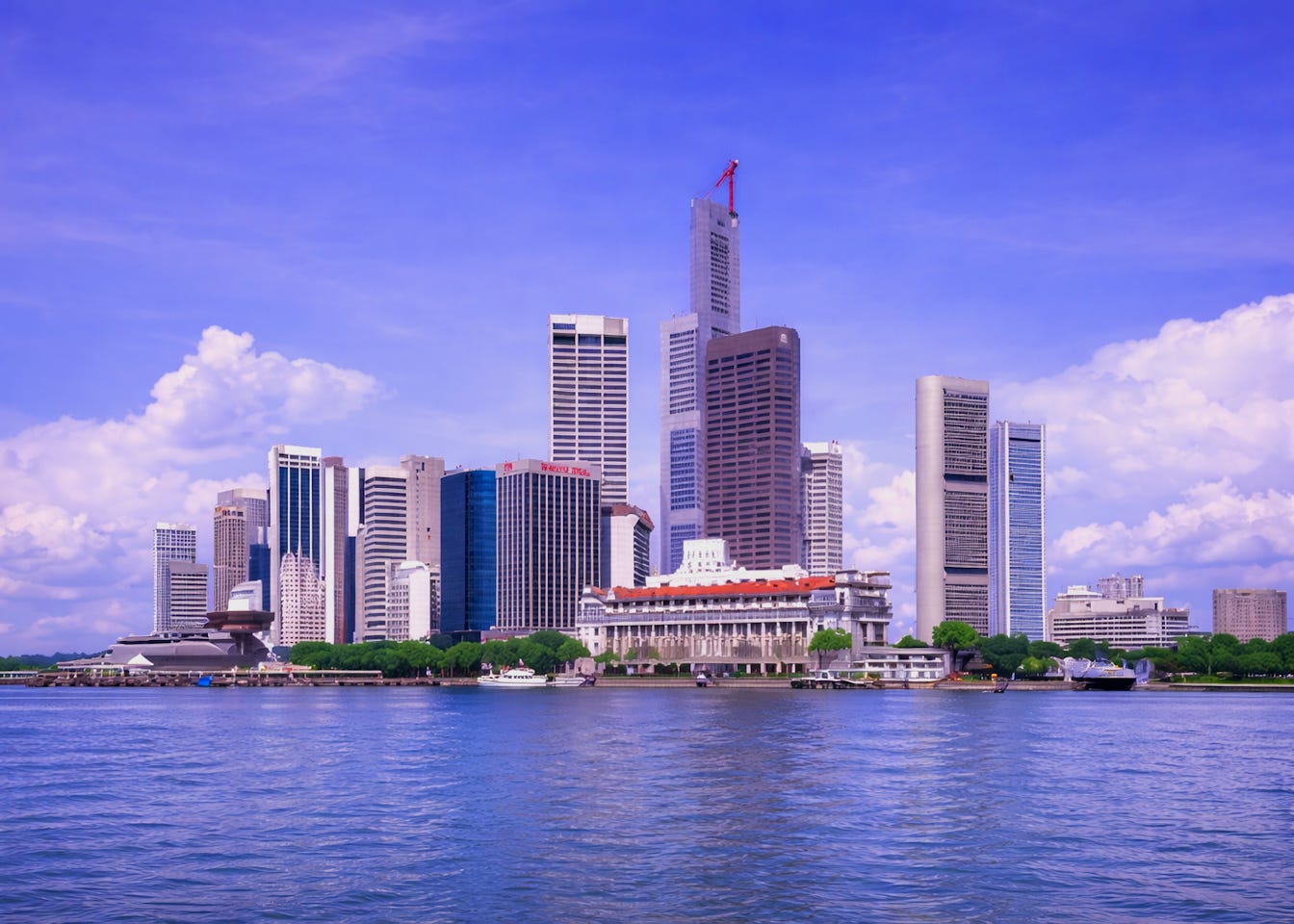
Under Lee Kuan Yew, Singapore exemplified pragmatic statism in a small, vulnerable state.
Singapore opened aggressively to global markets. It welcomed multinational capital. It embraced export led growth.
Yet the state retained control over land, housing, savings and key state linked enterprises. Public housing became a cornerstone of social cohesion. Strategic industries were cultivated deliberately.
Lee did not frame his policies in terms of ideological capitalism. He framed them in terms of survival.
He accepted markets because they worked. He constrained behaviour when it threatened cohesion. He prioritised administrative competence and elite recruitment.
The system was pro-market but not market ruled.
Example 2: Deng Xiaoping
In China, Deng Xiaoping dismantled rigid central planning without surrendering party supremacy.
Special Economic Zones were created as controlled experiments. Private enterprise was gradually tolerated. Foreign investment was invited.
Yet the Communist Party remained dominant. Political pluralism was not liberalised. Strategic sectors remained under state influence.
Deng’s famous remark about black cats and white cats captures the essence of pragmatic statism. Ideological colour did not matter. Growth and stability did.
Markets were introduced not as philosophical commitments but as development mechanisms.
What Pragmatic Statism Is Not
It is not pure authoritarianism. Authoritarian regimes can be ideological, erratic or economically destructive.
It is not classical socialism. It does not insist on comprehensive public ownership.
It is not neoliberalism. It does not treat market outcomes as inherently legitimate.
It is not mere technocracy. It is political and strategic, not purely administrative.
It is better understood as strategic state primacy combined with instrumental flexibility.
The Structural Tension
Pragmatic statism contains internal risks.
Concentrated power can ossify.
Elite recruitment can drift from competence to loyalty.
Performance legitimacy becomes fragile if growth slows.
Limited pluralism may eventually constrain innovation.
Its strength is coherence. Its weakness is centralisation.
A Condensed Definition
Pragmatic statism is a system in which the state retains strategic supremacy over national development, uses markets instrumentally rather than ideologically, derives legitimacy from performance, maintains social order as a precondition for growth, and plans beyond short term political cycles.
It is neither left nor right in the traditional Western sense.
It is a governing method.
Whether it is sustainable outside specific cultural and institutional conditions is another question entirely.